An Official website of the Kingdom of Saudi Arabia
Adaa Center Organizes a Workshop on “Leveraging Data to Support Government Performance Improvement”
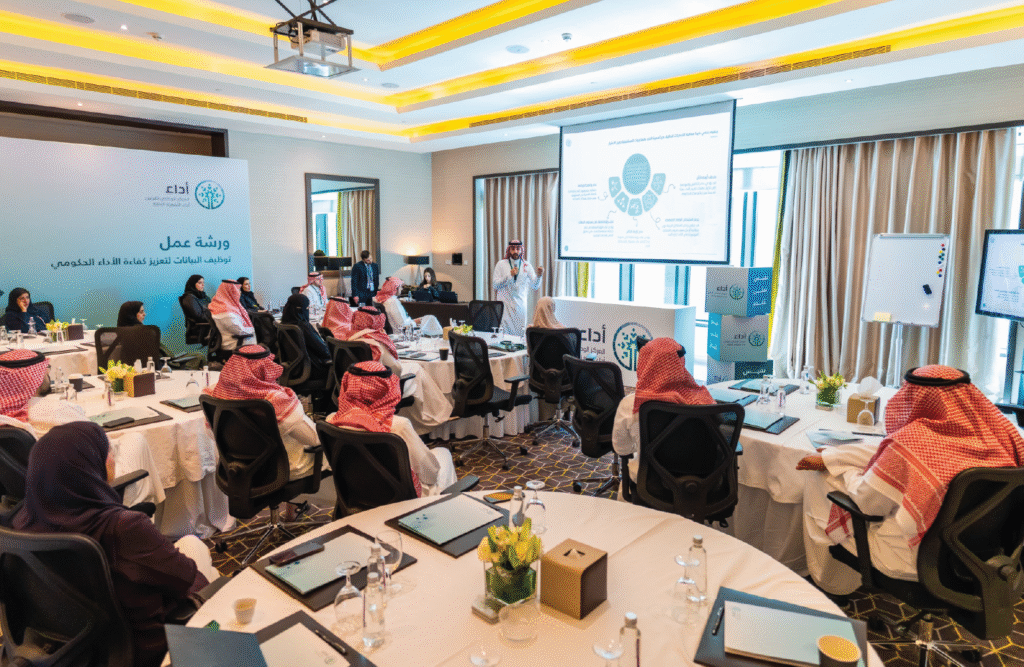
The National Center for Performance Measurement of Public Entities (Adaa) organized a workshop titled “Leveraging Data to Enhance Government Performance Efficiency” as part of its ongoing efforts to strengthen collaboration and integration among public entities in the field of performance management. The workshop aimed to review the current state of the government performance ecosystem, highlight future directions in this field, and explore ways to utilize data to support national objectives and achieve the goals of Saudi Vision 2030. Several government entities participated in the workshop, including the Saudi Data and AI Authority (SDAIA), the Ministry of Finance, the Ministry of Economy and Planning, the Ministry of Human Resources and Social Development, along with a number of other public entities. Their participation contributed to the exchange of expertise and the discussion of key challenges and opportunities related to data utilization. This workshop comes as a continuation of the Center’s ongoing programs designed to empower government entities to adopt best practices in performance management. Adaa has delivered a variety of training programs that have benefited more than 406,000 trainees through e-learning, in-person training, and interactive lectures. The Center also monitors and measures the performance of 614 government entities through periodic reports that cover 278 indicators and 1,172 initiatives.
Adaa Board of Directors Holds Its 25th Meeting
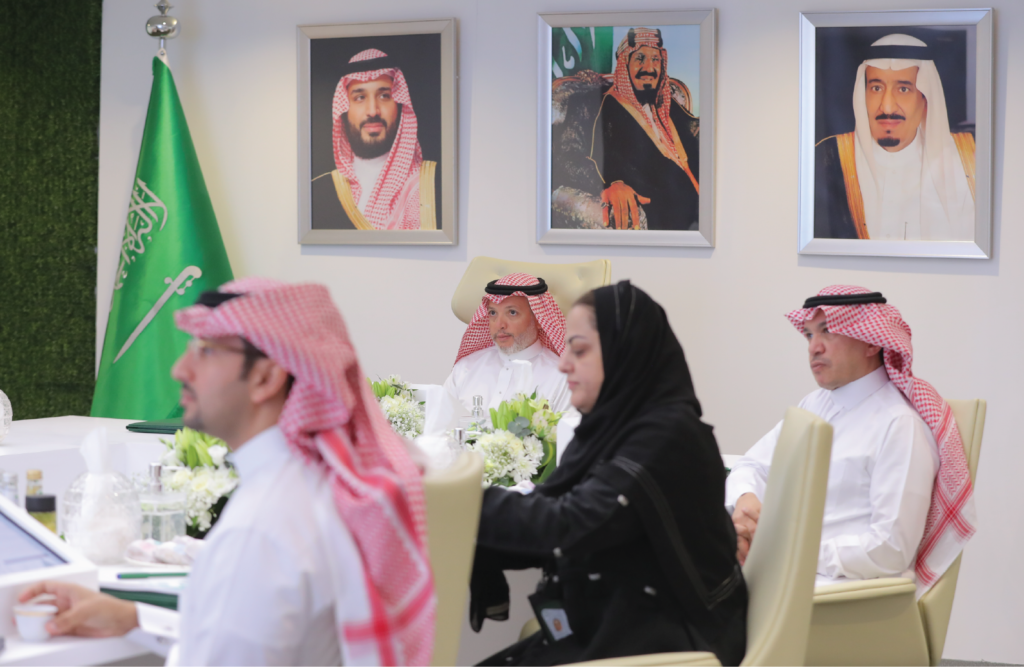
The Board of Directors of the National Center for Performance Measurement (Adaa) held its twenty-fifth meeting, during which it discussed several agenda items aimed at strengthening the Center’s role in supporting government entities to achieve their objectives in line with the aspirations of the Kingdom’s wise leadership. The Board reviewed the 2025 Institutional Strategy Performance Report, as well as the second-quarter performance results of government entities for 2025. It also discussed a set of decisions and directives related to the development of the government performance measurement system, with the aim of empowering public entities and enabling them to achieve excellence. The meeting additionally highlighted Adaa’s ongoing efforts to enhance the capabilities of government entities, including its training programs, which have benefited more than 406,000 participants through e-learning, in-person sessions, and interactive lectures. The Board also reviewed the results of the first phase of the 2025 Performance Management Practices Evaluation for public entities, along with the commencement of the second phase of evaluations, bringing the total number of entities assessed this year to 38. Adaa continues to monitor and measure the performance of 614 government entities through periodic reports covering 278 indicators and 1,172 initiatives. This meeting comes as part of the Board’s regular sessions to monitor performance and support efforts dedicated to achieving the ambitious goals of Saudi Vision 2030.
Adaa Center Launches “Knowledge Bridges” to Support Government Entities in Enhancing Institutional Performance

The National Center for Performance Measurement (Adaa) has launched its empowerment product “Knowledge Bridges” in 2025, one of its leading knowledge-based initiatives aimed at supporting government entities in improving their institutional performance. The initiative focuses on sharing distinguished expertise, successful practices, and documenting cooperation across a range of fields, including strategy management, performance management, initiatives management, change management, performance culture, and beneficiary experience management. As part of the “Knowledge Bridges” initiative, Adaa conducted six workshops, knowledge-sharing sessions, and joint discussion meetings with 15 government entities, in addition to engaging 10 more entities to introduce them to the product and explain how it can be utilized in development efforts. The latest session was held in partnership with the Saudi Authority for Industrial Cities and Technology Zones (MODON) and the Ministry of Education, during which successful case studies were presented and experiences were shared with participating government entities. The launch of “Knowledge Bridges” comes as part of Adaa’s broader efforts in the field of institutional empowerment, aimed at elevating performance practices across government entities, strengthening communication among them, and promoting a culture of performance—supporting the path of continuous improvement and contributing to the achievement of Saudi Vision 2030 objectives.
Adaa Board Holds Its 22nd Meeting

Riyadh — The Board of Directors of the National Center for Performance Measurement (Adaa) held its 22nd meeting, during which it reviewed the performance of government entities for the third quarter of 2024 and their contributions to achieving Saudi Vision 2030 and national strategies, noting a continued improvement in overall indicators and initiatives. The Board reviewed the Center’s annual institutional strategy for 2024, including progress in measurement activities, with the Center now assessing the performance of over 600 government entities and working with relevant entities to enhance measurement readiness for more than 35 national strategies. Adaa also issues quarterly performance reports to heads of entities covering the performance of 21 ministries. The meeting reviewed beneficiary satisfaction measurement reports for 319 services provided by 25 government entities, and the Center’s efforts in training and capacity-building. These included 25 training courses benefiting more than 500 participants, joint training programs for over 240 beneficiaries, and e-learning programs for more than 54,000 trainees, in addition to performance lectures reaching around 1,500 participants. The Board also reviewed empowerment activities through the “Pioneers of Performance” meetings, which included 28 entities represented by 60 performance specialists. During the meeting, the Board approved the Center’s administrative regulations and work organization bylaws, along with general updates, assignments, and decisions related to government performance measurement and management.
Adaa Holds the 13th ‘Pioneers of Performance’ Meeting

Riyadh — The National Center for Performance Measurement (Adaa) organized the 13th “Pioneers of Performance” meeting titled “Activating Performance Review Outputs and Improvement Plans,” as part of its role in supporting government entities in performance management and enhancing communication to develop a shared understanding of leading practices. During the meeting, the Ministry of Finance presented its key practices and experiences in activating performance review outputs and improvement plans. The program also included contributions from experts and government representatives through presentations and interactive activities discussing successful practices, challenges, and improvement opportunities. The “Pioneers of Performance” meetings aim to create an interactive platform for government employees to exchange knowledge and share local and international best practices in performance management, based on the needs of government entities. Since its launch in 2019, the program has benefited 93 government entities with the participation of 546 representatives, and has featured several government entities presenting successful experiences related to performance measurement and management.
“Simulated Pilgrim” — An Innovative Tool to Enhance Service Quality During the Hajj Season

The National Center for Performance Measurement (Adaa) is implementing innovative approaches during this year’s Hajj season to reinforce advanced performance-measurement practices in government work, supporting development efforts and contributing to achieving targeted goals in line with global standards of excellence and institutional innovation. Adaa is measuring 81 services provided by 18 government entities through the “Simulated Pilgrim” tool during this year’s Hajj season, aiming to assess the satisfaction of pilgrims—both domestic and international—with the quality of public services. The initiative also supports the improvement and development of government services and contributes to the issuance of real-world reports that reflect beneficiaries’ satisfaction levels. The “Simulated Pilgrim” methodology involves a pilgrim performing all stages and steps of the Hajj journey, documenting each phase and service received. This allows Adaa to evaluate service quality comprehensively and monitor the performance of government entities, focusing on criteria such as the ease of procedures, accessibility of service centers, user-friendliness of digital systems, staff interaction, processing speed, and the quality of service outcomes. Findings are analyzed and compiled into reports for decision-makers to support continuous improvement of public services. Adaa applies the “Simulated Pilgrim” tool across the full service journey, beginning with contracting and permits, land-travel conditions and road quality, air-transport services, airports, and trains, followed by arrival at the Holy Mosques, performing Hajj rituals, and all supporting services that ensure pilgrims’ comfort. These include transportation within the Holy Sites via public transit, healthcare, accommodation, hospitality, tourism, and logistics services, as well as crowd-management operations between the Holy Sites and the Grand Mosque, concluding with departure services by land and air. All these efforts are carried out in coordination with the government entities participating in this year’s Hajj season.
Adaa Implements Innovative Tools to Measure the Performance of 18 Government Entities During the 1445H Hajj Journey

The National Center for Performance Measurement (Adaa) continues to strengthen the culture of performance measurement and transparency in government work, supporting the Kingdom’s efforts to achieve global leadership in government performance, enhance service quality, and fulfill the objectives of Saudi Vision 2030. Adaa measures the performance indicators of government entities through standardized tools designed to assess efficiency and effectiveness. The Center also issues periodic reports on progress toward strategic objectives across sectors, indicator performance levels, and initiative advancement aligned with Vision 2030, in addition to measuring beneficiary satisfaction with public services, including the full Hajj journey. During this year’s Hajj season, Adaa is measuring 81 services provided by 18 government entities to the Guests of Allah from inside and outside the Kingdom. The Center works with a development-centered approach aimed at achieving excellence and institutional innovation by enhancing measurement methodologies and issuing recommendations based on data and performance indicators, thereby improving productivity, effectiveness, decision-making, and impact assessment across all government sectors. Adaa explained that the purpose of the measurement is to assess pilgrims’ satisfaction with the public services provided throughout their Hajj journey, in alignment with the Kingdom’s ongoing efforts to serve the Guests of Allah and ensure continuous improvement of these services. This supports pilgrims in performing their rituals with greater ease and contributes to the Center’s broader programs aimed at improving government services through quality measurement and beneficiary feedback. Adaa employs three primary tools: electronic surveys, field interviews, and the Simulated Pilgrim. Electronic surveys gather direct feedback from pilgrims on the services they received during their journey, while the Simulated Beneficiary tool evaluates the level of compliance of government entities with approved service-delivery standards. The Center noted that the services measured span the entire Hajj journey, beginning with contracting and permit issuance, land travel and road quality, air transport, airports, and train services, followed by arrival at the Holy Mosques and performance of the Hajj rituals. The measurement also covers all supporting services such as transportation within the Holy Sites, healthcare, accommodation, hospitality, tourism, and logistics, along with crowd-management operations between the Holy Sites and the Grand Mosque, concluding with departure services by land and air. All measurement activities are conducted in collaboration with the relevant government entities participating in this year’s Hajj season.
Adaa Measures the Hajj Performance Journey
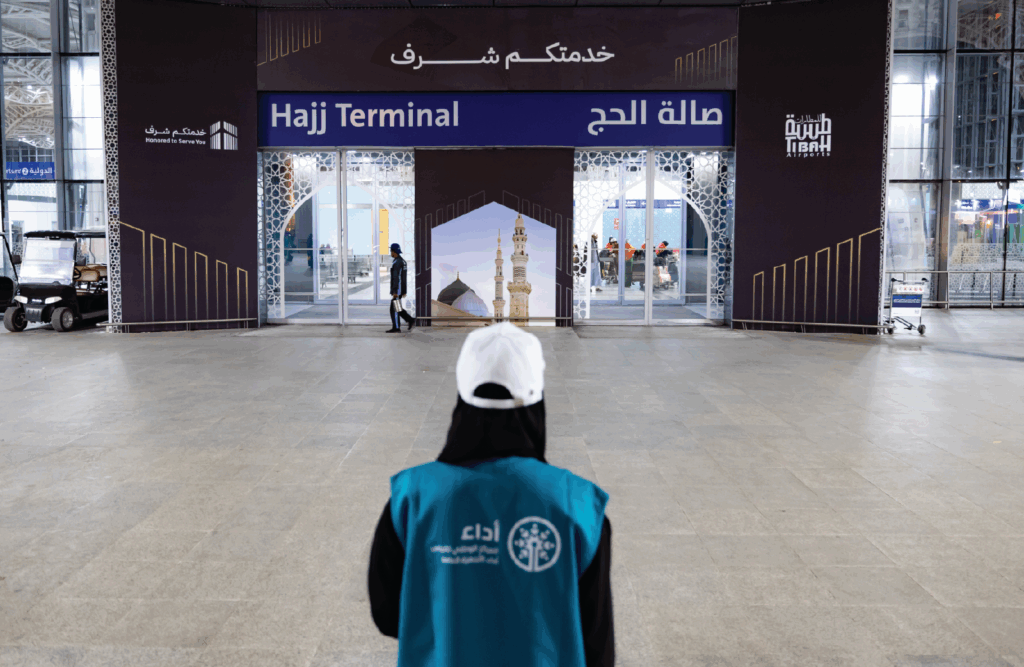
The National Center for Performance Measurement (Adaa) is measuring the Hajj Performance Journey for the year 1445H, assessing 81 services provided by 18 government entities to the Guests of Allah. The aim is to identify pilgrims’ satisfaction with the services offered during their Hajj rituals and their visit to the Prophet’s Mosque, in line with the objectives of Saudi Vision 2030. Eng. Rashid bin Abdullah Al-Qaoud, Director General of Adaa, explained that serving the Guests of Allah is one of the Kingdom’s highest priorities under the leadership of the Custodian of the Two Holy Mosques King Salman bin Abdulaziz Al Saud, and His Royal Highness Prince Mohammed bin Salman bin Abdulaziz Al Saud, Crown Prince and Prime Minister — may Allah preserve them. He noted that measurement efforts support improving service quality for pilgrims by monitoring satisfaction levels and working to enhance service delivery. He added that the measurement process follows key stages beginning with contracting and permit issuance, then travel to the Hajj sites, followed by the performance of rituals and movement between the Holy Sites, as well as supporting services in Makkah. It then proceeds to the pilgrims’ visit to the Prophet’s Mosque and the services provided in Madinah, concluding with the pilgrims’ departure to their home countries. Adaa measures services provided by various ministries, government bodies, and public entities.
Adaa Board of Directors Holds Its 20th Meeting and Approves the Center’s Strategy
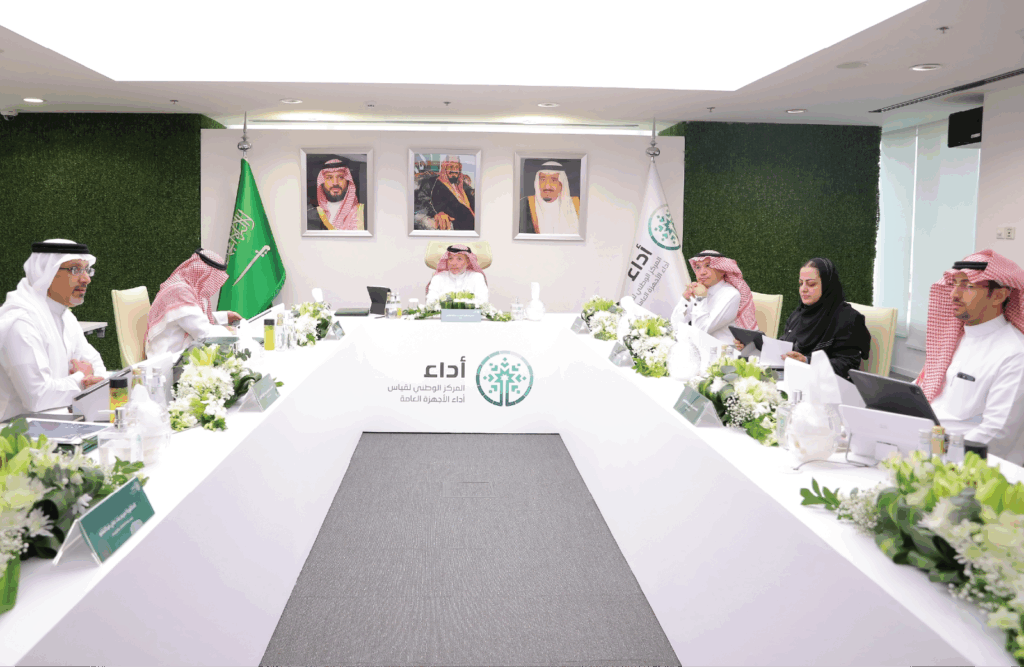
The Board of Directors of the National Center for Performance Measurement (Adaa) held its twentieth meeting, during which it reviewed the Center’s efforts in measuring the performance of government entities in support of Saudi Vision 2030 and the national strategies. The Board also approved Adaa’s Strategy for the years 2024–2027. The strategy aims to enhance the performance efficiency of government entities to support the realization of Vision 2030 and national strategies, enabling entities to operate at high performance levels and achieve greater beneficiary satisfaction with the services provided. This aligns with the strategy’s mission: “Effective Government Performance for an Ambitious Nation.” The strategy supports government entities in achieving their goals by measuring the maturity of performance measurement and management practices according to approved methodologies, and by developing human capabilities in this field. It also seeks to enhance performance-improvement efforts by utilizing advanced artificial intelligence and machine-learning techniques in data analysis and performance-risk forecasting, thereby supporting decision-making processes. The strategy emphasizes strengthening government-service improvement processes and systematically measuring beneficiary satisfaction and experience, in line with one of Vision 2030’s core objectives: “Improving the Performance of Government Entities.”